Press Note
Japan
Source by :- CNA News Hub
23 December 2025
Japan grapples with growing bear threat amid record number of attacks
Bear attacks have killed a record 13 people in Japan this year, prompting emergency measures that make it easier for local governments to authorise hunters to shoot bears in populated areas.
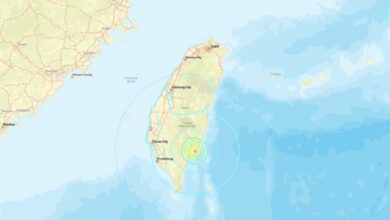
A bear warning sign is displayed near a site where a Spanish visitor was attacked by a cub in October at Shirakawa-go, a popular tourist spot and one of Japan’s UNESCO World Heritage sites, in Shirakawa village, Gifu Prefecture, Japan, Nov 15, 2025. (Photo: Reuters/Issei Kato)
OMACHI, Japan: With a rifle slung across his back, Yoshikazu Katsuno scans a densely wooded area near a residential neighbourhood, listening for the faint rustle that could signal a bear straying too close to human homes.
The 64-year-old hunter is among those on the front line of Japan’s growing struggle with bear encounters, patrolling parts of his hometown Omachi in central Japan’s Nagano Prefecture.
The city, a gateway to the popular Tateyama Kurobe Alpine Route, is known for its sweeping views of the Northern Alps and outdoor activities such as skiing and hiking.
But it is also seeing increasingly frequent bear sightings.
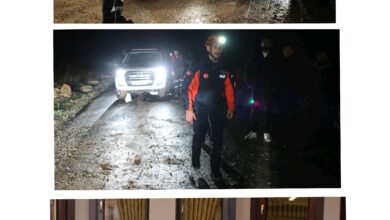
Hunter Yoshikazu Katsuno speaks to CNA during a bear patrol in his hometown Omachi, Nagano Prefecture, Japan.
Katsuno is one of about 150,000 licensed hunters in Japan, according to Dainihon Ryoyukai, a national hunters’ association based in Tokyo. Few of them, however, are full-time professionals.
In fact, despite years of experience, Katsuno has never hunted a bear in the wild.
“I have shot bears in a cage (after they were trapped) with my rifle to deliver a final blow,” he told CNA.
Until recently, local authorities typically hired hunters like Katsuno to cull wild boars, deer and monkeys that damage farmland and crops, paying about US$130 per animal.
But bears are now becoming a primary concern in Japan, particularly in the central and northern parts.
Nationwide, bear attacks have killed a record 13 people this year. Official figures show that 9,867 bears have been caught as of October, most of them culled.
Some local governments are increasing compensation for their capture, and introducing emergency measures such as making it easier to authorise hunters to shoot bears that enter populated areas.
A CLOSE BEAR ENCOUNTER
The threat has become personal for Katsuno. One night last year, he heard a loud crunching sound outside his house.
“It was around 10pm at night. I was smoking outside. I heard a crushing noise. We had heavy snow that day, so I thought the noise was from bamboo being crushed,” he told CNA.
The next morning, he discovered a persimmon tree near his home nearly stripped bare, its branches bent where a bear had perched to eat the fruit.
Despite the close encounter, Katsuno said Japan’s strict gun rules would not have allowed him to shoot, even if he had his rifle with him.
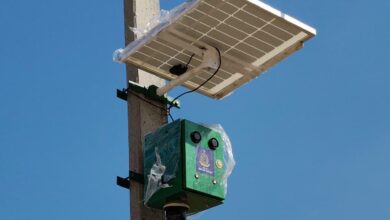
Members of Japan Self-Defense Forces (JSDF) set up a bear trap in Kazuno, Akita Prefecture, Japan on Nov 5, 2025. (File photo: Kyodo via Reuters)
Shooting is prohibited at night, and during the day requires prefectural authorisation. It is also limited to the official hunting season, which runs from mid-November to mid-February.
amid record number of attacks
Bookmark
Share
East Asia
Japan grapples with growing bear threat amid record number of attacks
Bear attacks have killed a record 13 people in Japan this year, prompting emergency measures that make it easier for local governments to authorise hunters to shoot bears in populated areas.
Japan grapples with growing bear threat amid record number of attacks
A bear warning sign is displayed near a site where a Spanish visitor was attacked by a cub in October at Shirakawa-go, a popular tourist spot and one of Japan’s UNESCO World Heritage sites, in Shirakawa village, Gifu Prefecture, Japan, Nov 15, 2025. (Photo: Reuters/Issei Kato)
Listen
5 min
Michiyo Ishida
Michiyo Ishida
23 Dec 2025 03:27PM
Bookmark
Share
Read a summary of this article on FAST.
FAST
OMACHI, Japan: With a rifle slung across his back, Yoshikazu Katsuno scans a densely wooded area near a residential neighbourhood, listening for the faint rustle that could signal a bear straying too close to human homes.
The 64-year-old hunter is among those on the front line of Japan’s growing struggle with bear encounters, patrolling parts of his hometown Omachi in central Japan’s Nagano Prefecture.
ADVERTISEMENT
The city, a gateway to the popular Tateyama Kurobe Alpine Route, is known for its sweeping views of the Northern Alps and outdoor activities such as skiing and hiking.
But it is also seeing increasingly frequent bear sightings.
Alt Text
Subscribe to our Chief Editor’s Week in Review
Our chief editor shares analysis and picks of the week’s biggest news every Saturday.
example@email.com
This service is not intended for persons residing in the E.U. By clicking subscribe, I agree to receive news updates and promotional material from Mediacorp and Mediacorp’s partners.
Hunter Yoshikazu Katsuno speaks to CNA during a bear patrol in his hometown Omachi, Nagano Prefecture, Japan.
Katsuno is one of about 150,000 licensed hunters in Japan, according to Dainihon Ryoyukai, a national hunters’ association based in Tokyo. Few of them, however, are full-time professionals.
ADVERTISEMENT
In fact, despite years of experience, Katsuno has never hunted a bear in the wild.
“I have shot bears in a cage (after they were trapped) with my rifle to deliver a final blow,” he told CNA.
Until recently, local authorities typically hired hunters like Katsuno to cull wild boars, deer and monkeys that damage farmland and crops, paying about US$130 per animal.
But bears are now becoming a primary concern in Japan, particularly in the central and northern parts.
Nationwide, bear attacks have killed a record 13 people this year. Official figures show that 9,867 bears have been caught as of October, most of them culled.
ADVERTISEMENT
Some local governments are increasing compensation for their capture, and introducing emergency measures such as making it easier to authorise hunters to shoot bears that enter populated areas.
A CLOSE BEAR ENCOUNTER
The threat has become personal for Katsuno. One night last year, he heard a loud crunching sound outside his house.
“It was around 10pm at night. I was smoking outside. I heard a crushing noise. We had heavy snow that day, so I thought the noise was from bamboo being crushed,” he told CNA.
The next morning, he discovered a persimmon tree near his home nearly stripped bare, its branches bent where a bear had perched to eat the fruit.
Despite the close encounter, Katsuno said Japan’s strict gun rules would not have allowed him to shoot, even if he had his rifle with him.
Members of Japan Self-Defense Forces (JSDF) set up a bear trap in Kazuno, Akita Prefecture, Japan on Nov 5, 2025. (File photo: Kyodo via Reuters)
Shooting is prohibited at night, and during the day requires prefectural authorisation. It is also limited to the official hunting season, which runs from mid-November to mid-February.
ADVERTISEMENT
In response to the growing number of bear encounters, Japan has slightly relaxed its tightly controlled gun laws.
Since September, town and city officials have been able to authorise hunters to use rifles in emergency situations, provided the safety of nearby residents can be assured.
AN ONSEN TOWN ON ALERT
Hunting alone is not enough to make a living. Hence, Katsuno works full time as a bus driver – a job that has given him a front-row view of the problem.
His daily route takes him to Omachi Onsenkyo, a hot spring resort village where bears were spotted almost daily this summer.
Surrounded by forest, the area lies along a natural corridor used by bears. They often follow a nearby river as they move between mountain ranges, sometimes crossing through the town itself.
Authorities say the animals are venturing closer to human settlements in search of food, as summer heatwaves affect the growth of nuts and berries.
“There are four or five bears constantly coming to this area. The same bears are sticking around. We have tried to drive them away or capture them,” said Joji Hirabayashi, a crisis management officer with the city.
“Before considering the use of rifles, we place cages as traps and put food inside to attract bears.”
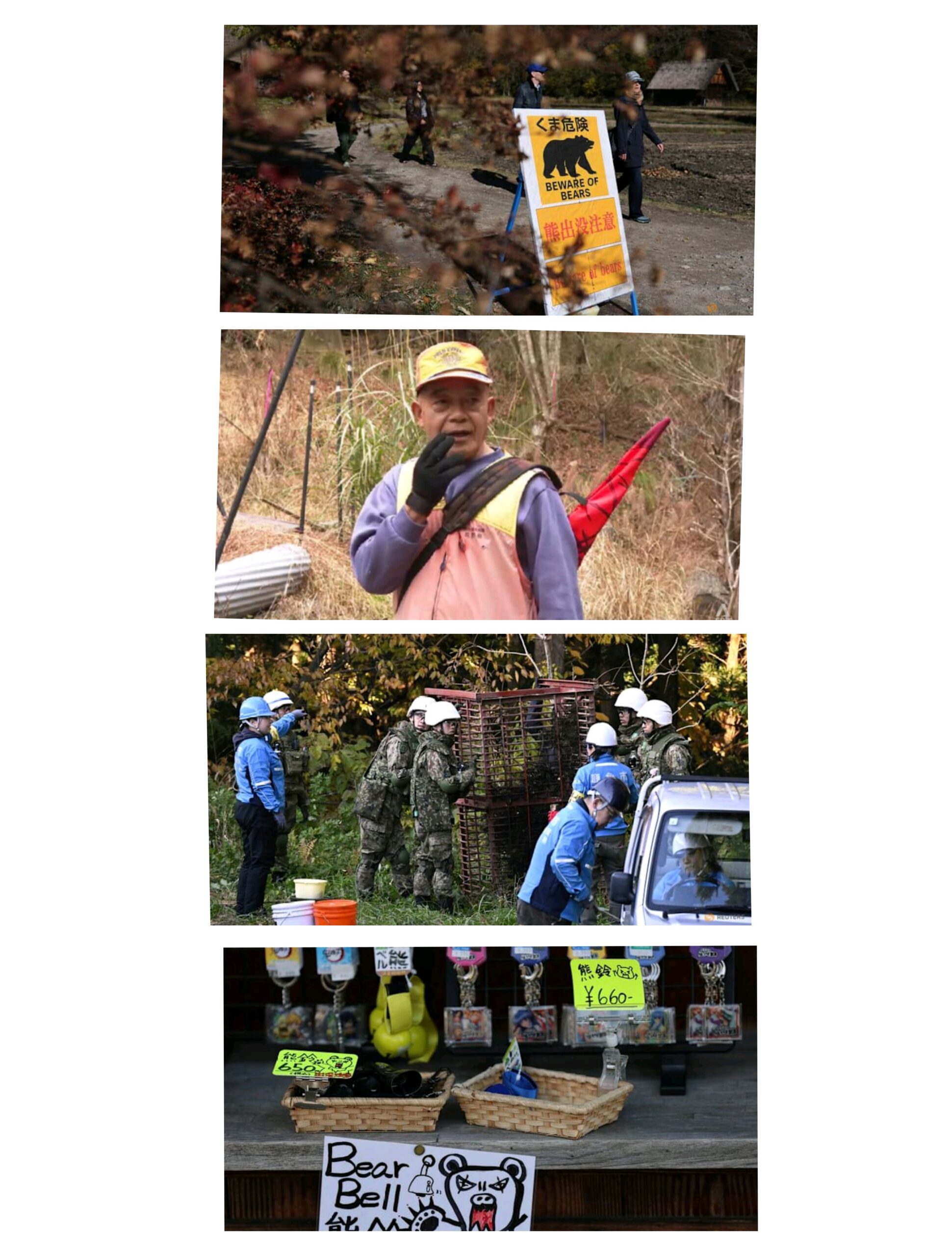
Bear bells are displayed for sale at a souvenir shop at Shirakawa-go, a popular tourist spot and one of Japan’s UNESCO World Heritage sites, in Shirakawa village, Gifu Prefecture, Japan, Nov 15, 2025. (Photo: Reuters/Issei Kato)
According to hotel operators, bears were first spotted in the area about five years ago. Since then, businesses have taken precautions.
The Tateyama Prince Hotel, for instance, has installed warning signs and rents out bells for guests to ward off bears.
“We are now informed (about bear sightings) by the local authorities systematically through Line (the communication app) and emails,” said Yoshiko Endo, the hotel’s managing director.
“We relay to customers (the information) we receive and discourage them from going out (if bears are spotted). With the current bear problem, we are in a dilemma over whether to cut down trees and remove the (nearby) forest.”
Concerns over bear encounters are also affecting tourism.
“Tourists who were planning to come are very concerned about the bears. I hear they are showing reservations about visiting,” said Sayaka Hosokawa, an officer from the Omachi City Tourism Association.
As winter approaches, bear sightings have declined with the start of hibernation season. But officials warn the risks are far from over, as food shortages could keep some bears active.
RNI:- MPBIL/25/A1465
Devashish Tokekar
VANDE Bharat live tv news Nagpur
Editor/Reporter/Journalist
Indian Council of press,Nagpur
Journalist Cell
All India Media Association
Nagpur District President
Delhi Crime Press
AD.Associate /Reporter
Contact no.
9422428110/9146095536
Head office:- plot no 18/19, flat no. 201,Harmony emporise, Payal -pallavi society new Manish Nagar somalwada nagpur – 440015